
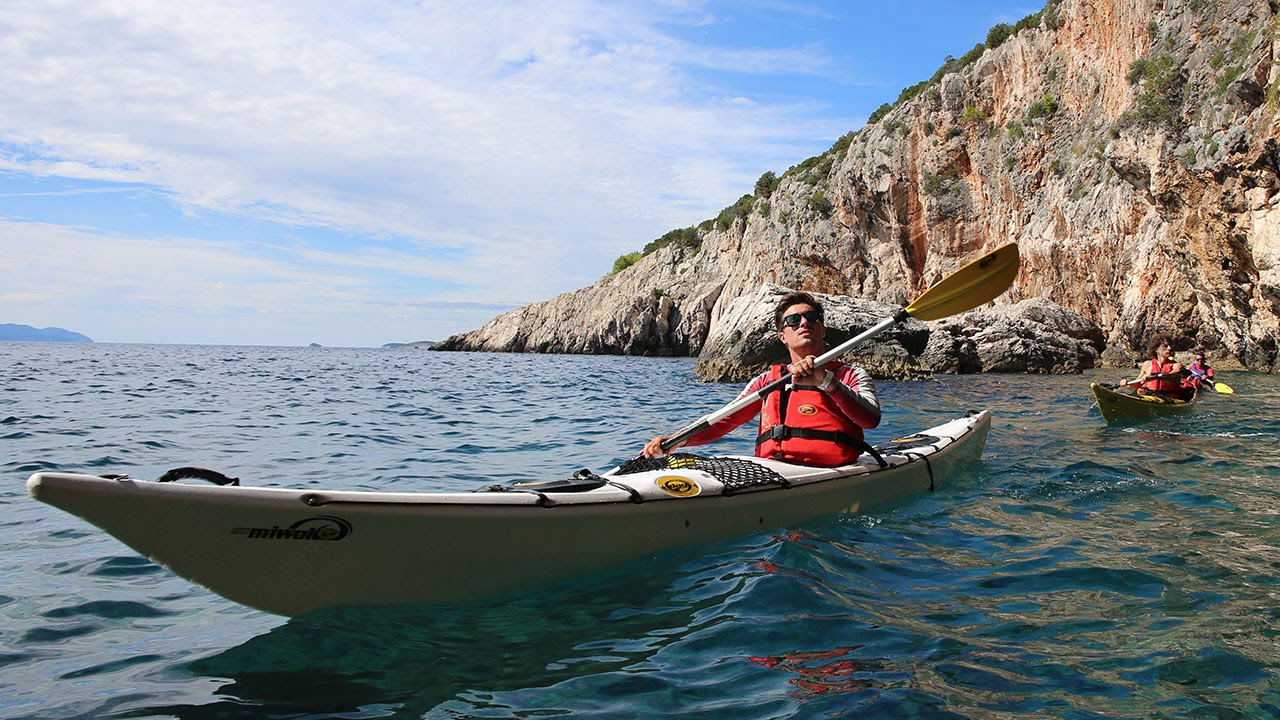
 It’s an iconic image of outdoor exploration: a kayak glides across a glassy stretch of water, its bow knifing through the mist and its wake shimmering in reflected light. If that sort of thing calls to you, we’re here to help. With some thoughtful preparation, you can slip into the cockpit and put paddle to pond.
Chances are you’re not going to buy a boat immediately, though it’s certainly an option, and REI can help with that. And you probably guessed your other options for getting started kayaking:
Borrow a kayak from a friend. It’s even better if your friend is also an expert paddler who can take you out and teach you the basics.
Rent a kayak. Go to an on-the-water outfitter so you don’t have to mess with transporting the boat. You’ll get the bare minimum amount of gear and instruction, but it’s a low-cost way to dip your toes into the sport.
Sign up for a tour. You get boat, gear and fundamentals all in one package. Options range from the parks department at your local lake to an adventure-touring company in an exotic locale.
Sign up for a class. Like a tour, everything is provided. An introductory class offers more in-depth instruction than a tour, so it’s the better option if you plan to take up kayaking in earnest.
Kayak Gear and Clothing
This article assumes you’re in a classic kayak: one with a cockpit and a hatch or two for stowing gear. If the weather and water are warm, your friend or guide might put you in a wide, stable boat without a cockpit.
Essential kayaking gear: Anyone who provides a boat should also provide these items:
Coastguard-approved PFD (Personal Flotation Device) that fits properly
Paddle (make sure they check that it’s the right size for you)
Bilge pump
Spray skirt (optional on warm, calm days)
Proper clothing: Bring the following for a warm-weather, warm-water outing:
Swimwear or shorts (noncotton and nonbinding)
Short- or long-sleeve rashguard top (any noncotton top will work)
Neoprene footwear
Sun-shielding hat
Lightweight fleece jacket or vest (weather-dependent)
Spray jacket or rain jacket and pants (weather-dependent)
If conditions are colder than 60 F (especially the water), a wetsuit is also required. For more details, read What to Wear Kayaking.
Personal items: If you know your Ten Essentials, then many of these should be familiar:
Plenty of water
Snacks for energy, plus a lunch for longer tours
Sunscreen, lip balm and sunglasses (with a retainer)
First-aid kit
Signaling whistle
Watch (so you can give yourself plenty of time to get back)
Headlamp (in case you’re too slow getting back)
Dry bags (for things you don’t want to get wet)
How to Adjust Your Kayak
A well-adjusted kayak will be more stable and comfortable to paddle. Do your adjusting while the boat is sitting on dry land, and focus on three points of contact:
Snug your butt firmly against the seatback. If your boat lets you fine-tune the angle of the seat or seatback, do whatever feels most comfortable. For balance and power, though, you want to sit more upright.
Place the balls of your feet on the footpegs; then check to see if you have a slight bend in your knees. Most footpegs adjust by tilting them and sliding them along a track to preset stopping points. It’s often easier to get out of the boat to slide the pegs.
Make sure your bent knees are in firm contact with each side of the cockpit. This helps you control the side-to-side motion of the boat as you paddle. Your fit should be snug but not so jammed-in that you can’t get out if you capsize.
Read more on https://www.rei.com/learn/expert-advice/getting-started-kayaking.html

No comments:
Post a Comment